Particle size analysis is a technical procedure to characterize the size distribution of particles in a powder or liquid sample. It is widely used in R&D and quality control in industries involved with nanotechnology, pharmaceuticals, cosmetics, food, electronic materials, sintering materials, Li-ion battery electrodes, etc.
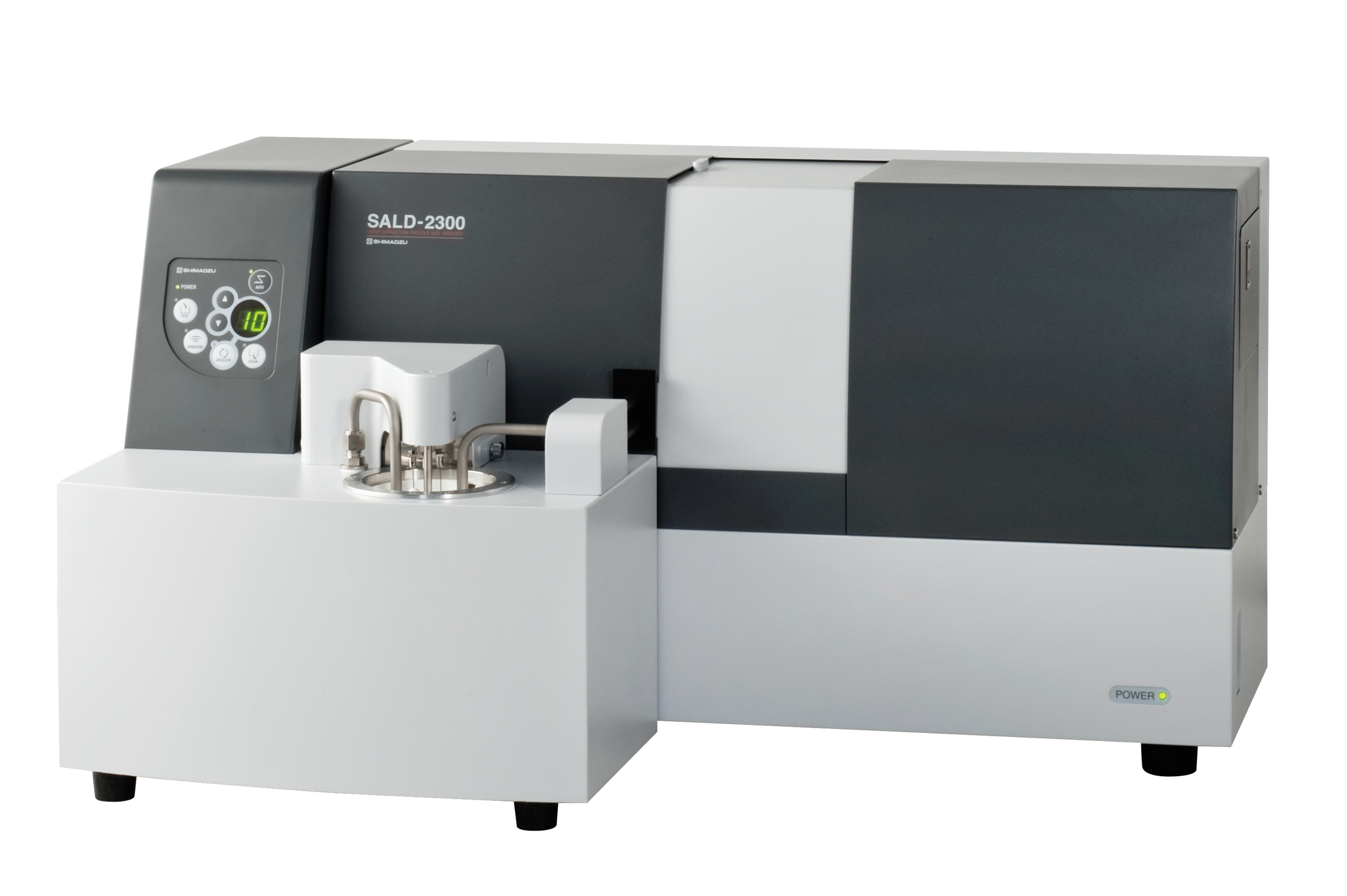
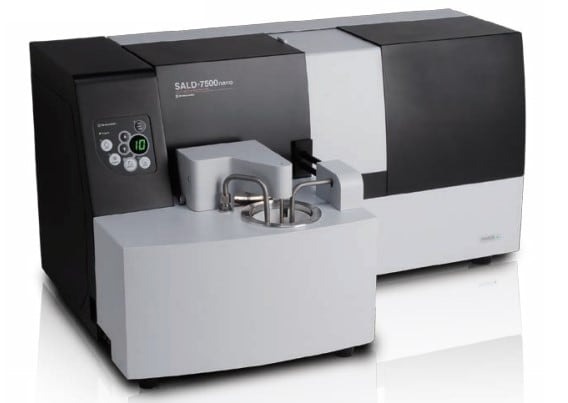
Shimadzu is a leading manufacturer of particle size analyzers and offers a comprehensive product portfolio, such as the SALD-2300 laser diffraction particle size analyzer, which provides accurate evaluation of the change in particle size distribution in the submicron to micron range; the SALD-7500nano nano particle size analyzer — a powerful tool for continuously measuring changes in particle size/distribution at one-second intervals within 7 nm to 800 µm; the Aggregates Sizer, which enables the quantitative evaluation of particle amounts in the SVP range as a concentration (unit: μg/mL); and the iSpect DIA-10 dynamic image analyzer, which combines particle size and image analysis technology to offer complete particle characterization.
Learn more about our full lineup and a variety of software and consumables below.
Particle Size Analysis — FAQ
What is Particle Size Analysis?
Particle Size Analysis measures the distribution of particle sizes in a sample, often using laser diffraction, image analysis, or dynamic light scattering to characterize powders, suspensions, emulsions, and dispersions.
Which Shimadzu PSA instruments are available?
Shimadzu offers laser diffraction analyzers (SALD series), particle imaging systems, nanoparticle analysis tools, and combination wet/dry measurement systems.
What particle size ranges can Shimadzu analyzers measure?
Depending on the model, Shimadzu PSA systems can cover a wide range from nanometers (nm) to several millimeters (mm), enabling analysis of fine powders, colloids, aggregates, and coarse granules.
What measurement principles are used?
Shimadzu instruments use laser diffraction, dynamic light scattering (DLS), and image-based analysis to determine size distribution, morphology, and agglomeration behavior in various sample types.
What types of samples can be measured?
Powders, suspensions, emulsions, slurries, granules, pharmaceuticals, pigments, food ingredients, abrasives, metals, ceramics, polymers, and chemical formulations.
What are typical applications?
Pharmaceutical raw materials, quality control of powders, pigment dispersion, cement and minerals, food additives, polymers, ceramics, and R&D for particle engineering or formulation development.
What accessories are available?
Wet dispersion units, dry powder feeders, circulation systems, flow cells, ultrasonic dispersers, cuvettes, and automated measurement/sample handling accessories depending on the model.
What software is provided for PSA instruments?
Software includes distribution analysis tools, multimodal fitting, morphology analysis, database management, audit trails, automated reporting, and regulatory‑compliant workflows.
How is particle size reported?
Results may include D10, D50, D90, median diameter, volume/mass distributions, polydispersity, and graphical outputs such as distribution curves and cumulative plots.
Do Shimadzu PSA instruments support regulatory compliance?
Yes—depending on software configuration, features include audit trails, user‑role management, secure data handling, 21 CFR Part 11 compliance, and fully traceable reporting.
What sample preparation is required?
Preparation depends on the sample: dispersion in liquid, sonication, dilution, defoaming, removal of bubbles, and—for dry measurements—ensuring powder flowability and consistent feeding.
How long does a measurement take?
Laser diffraction typically yields results within seconds to minutes, depending on sample prep, wet/dry method, and desired analytical precision.
Do instruments support wet and dry measurement modes?
Yes—many Shimadzu PSA systems support both modes via interchangeable accessories to adapt to powders, dispersions, and sensitive materials.
How accurate and repeatable are Shimadzu PSA systems?
High‑stability lasers, multi‑angle detection systems, and controlled dispersion units ensure excellent repeatability, precision, and long‑term measurement stability across a wide size range.
What maintenance is needed?
Cleaning flow cells and dispersion units, checking optical pathways, maintaining pumps, replacing tubing or filters, calibrating detectors, and performing scheduled preventive maintenance.
Can PSA results be exported or integrated into LIMS?
Yes—data can be exported as CSV, PDF, images, or directly integrated into laboratory information systems depending on software configuration.
How do I troubleshoot common PSA issues?
Check dispersion quality, remove bubbles, verify alignment, ensure correct refractive index input, inspect sample cleanliness, and confirm that agglomerates are properly dispersed.
What consumables are typically needed?
Cuvettes, sample tubes, filters, flow cell cleaning solutions, refractive‑index standards, dispersants, and accessories for wet/dry measurement systems.
Are nanoparticle measurements supported?
Yes—depending on the model, dynamic light scattering (DLS) or high‑sensitivity diffraction modules can characterize nanoparticles and colloidal systems.
How do I request demos, application support, or pricing?
Contact your regional Shimadzu representative for demonstrations, application testing, sample evaluation, workflow consulting, or pricing information.