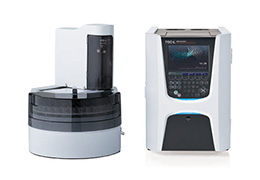
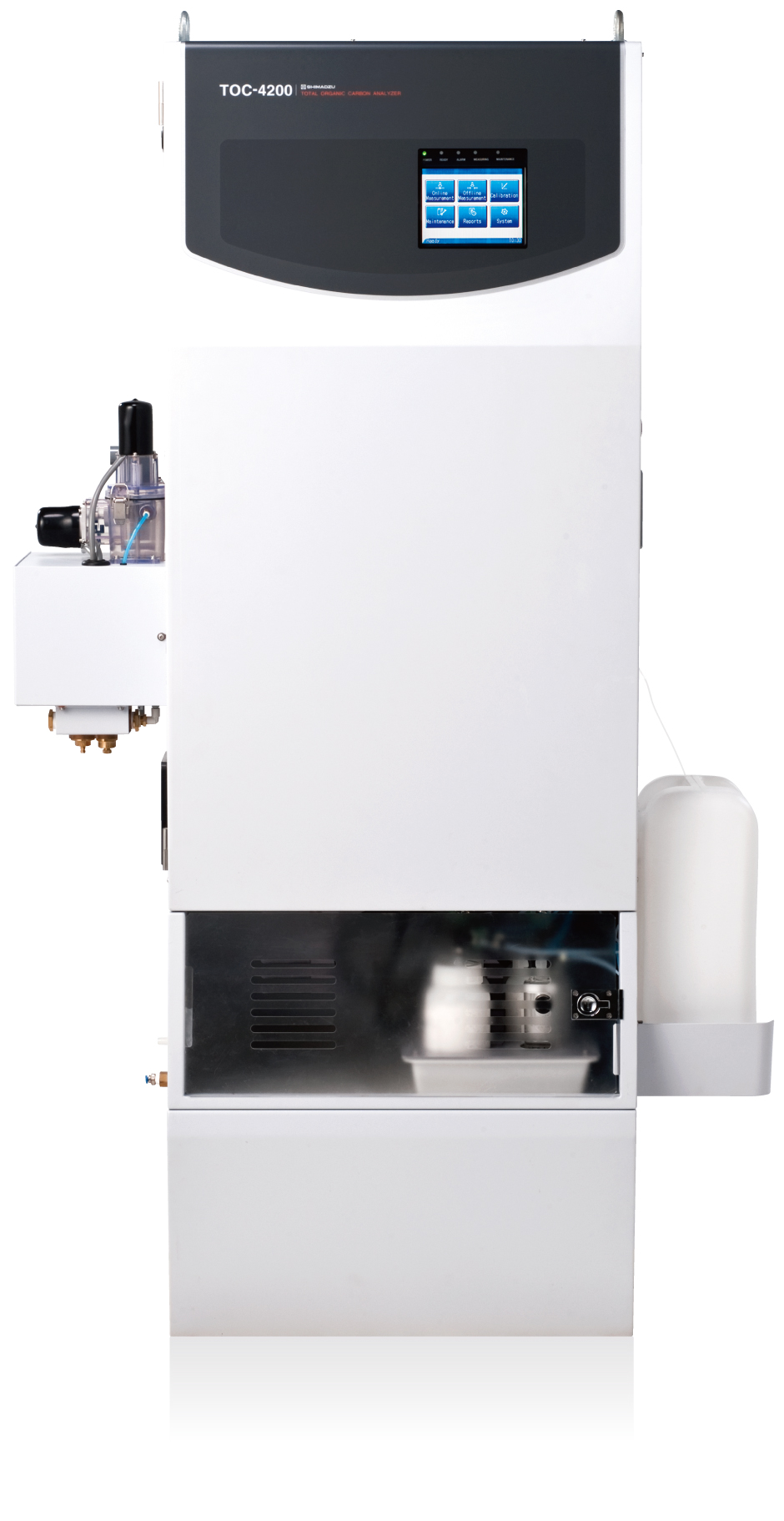
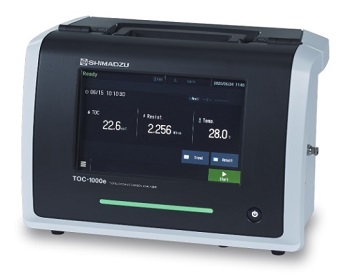
TOC analysis machines are analytical instruments used to measure the total organic carbon content in water. These total organic carbon analysis machines are essential for quality control of public drinking water, control and evaluation of pharmaceutical manufacturing processes, and various other applications. Shimadzu is one of the world's leading manufacturers of total organic carbon analysers. Our TOC analysers offer high detection sensitivity, making them suitable for a wide array of environmental and pharmaceutical industry applications. We provide a complete TOC instrument lineup, including our TOC-L series, which achieves the highest detection sensitivity through combustion catalytic oxidation. The TOC-4200 is an on-line water quality analyser supporting diverse samples with advanced operability. For ultra-pure water measurement, our compact eTOC series on-line TOC analyser is ideal. Learn more about our full lineup, software, and consumables below.
TOC (Total Organic Carbon) Analyzers — FAQ
What is Total Organic Carbon (TOC) analysis?
TOC analysis quantifies organic carbon in water by oxidizing organic compounds and measuring the resulting CO₂. It is widely used in environmental, pharmaceutical, industrial, and laboratory applications.
Which Shimadzu TOC instruments are available?
Shimadzu offers TOC analyzers for laboratory, online, and high‑temperature combustion: TOC‑L series, TOC‑V legacy systems, TOC‑4200 online process analyzers, and specialized TN/TP (Total Nitrogen/Phosphorus) add‑on modules.
What oxidation methods do Shimadzu TOC systems use?
High‑temperature catalytic combustion (680–720°C) and optional UV‑promoted oxidation, enabling robust oxidation for a wide range of organic compounds.
What applications use TOC analysis?
Drinking water, wastewater treatment, environmental monitoring, pharmaceutical purified water (PW/WFI), cleaning validation, semiconductor water, food/beverage production, and quality control.
What detection limits can be achieved?
Depending on the model, Shimadzu TOC systems can achieve detection limits in the low µg/L (ppb) range for ultrapure water and extend to thousands of mg/L for industrial and wastewater matrices.
Do TOC analyzers support pharmaceutical regulatory compliance?
Yes—Shimadzu TOC systems support USP <643>, EP 2.2.44, JP requirements, audit trails, electronic signatures, secure data handling, and 21 CFR Part 11 compliance when used with appropriate software.
What sample types can be measured?
Ultrapure water, potable water, surface water, wastewater, pharmaceutical water, saline solutions, high‑salt matrices, industrial process water, and organic‑rich samples using dilution or pretreatment.
How is calibration performed on TOC systems?
Multi‑point calibration using potassium hydrogen phthalate (KHP), internal standard checks, system suitability tests, and auto‑calibration functions depending on the instrument model.
Is autosampling available?
Yes—Shimadzu TOC analyzers offer autosamplers for high‑throughput labs, including 24–160 position units with options for stirring, acidifying, and replicates.
Do TOC instruments support simultaneous TN (Total Nitrogen) measurement?
Yes—optional TN modules allow simultaneous TOC/TN analysis using chemiluminescence or combustion detection depending on the system.
What maintenance is required?
Routine tasks include catalyst replacement (as needed), inspection of tubing, checking syringe/valve operation, verifying calibration, and replacing filters or reagents used in pretreatment.
Can TOC systems run non‑aqueous samples?
Some systems can analyze organic solvents or suspensions with appropriate dilution, sparging, or combustion optimization. Consult Shimadzu guidelines for compatibility.
Which software is used for TOC data analysis?
TOC‑Control software provides method setup, calibration, audit trails, data review, reporting, batch processing, and secure storage options.
Do Shimadzu TOC analyzers support online continuous monitoring?
Yes—the TOC‑4200 and other online systems provide continuous real‑time TOC monitoring for industrial facilities, regulatory compliance, and process control.
How do I troubleshoot typical TOC issues?
Inspect catalyst status, check carrier gas flow, review syringe operation, confirm calibration, inspect sample introduction lines, and verify oxidation temperature stability.
What consumables are commonly required?
Catalyst, carrier gas filters, syringes, septa, acid solutions, TN reagents, sample tubes, autosampler vials, and optional pre‑filters.
Can the system integrate with LIMS or network environments?
Yes—secure data export, automated file transfer, LIMS compatibility, and networked database storage are available depending on software configuration.
What detection methods are used for inorganic carbon (IC)?
Acidification and sparging remove IC prior to TOC analysis, or IC can be measured separately depending on the selected mode (NPOC, TOC‑direct, TC‑IC methods).
Are high‑salt or difficult matrices supported?
Yes—high‑salt combustion models, dilution options, salt‑resistant catalysts, and optimized injection strategies help manage seawater, brines, and industrial waste.
How do I request demos, application support, or quotations?
Contact your local Shimadzu representative for demonstrations, method development, validation support, or pricing information.