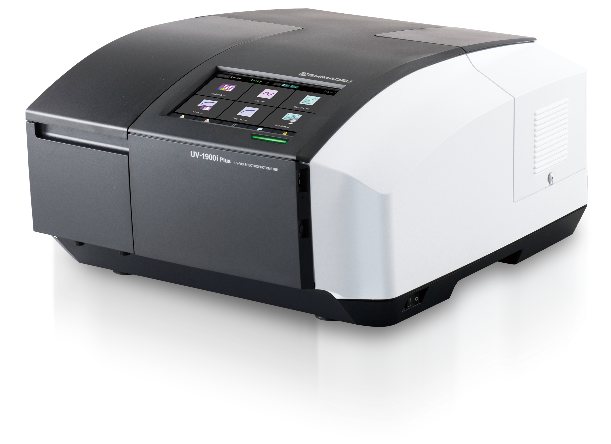
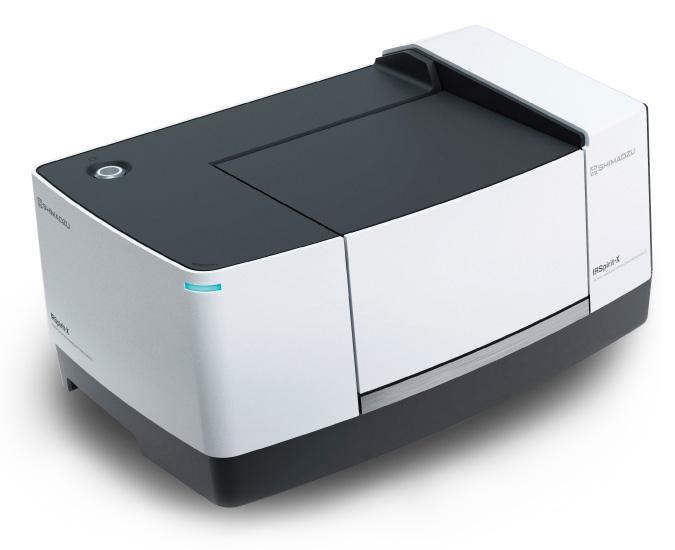
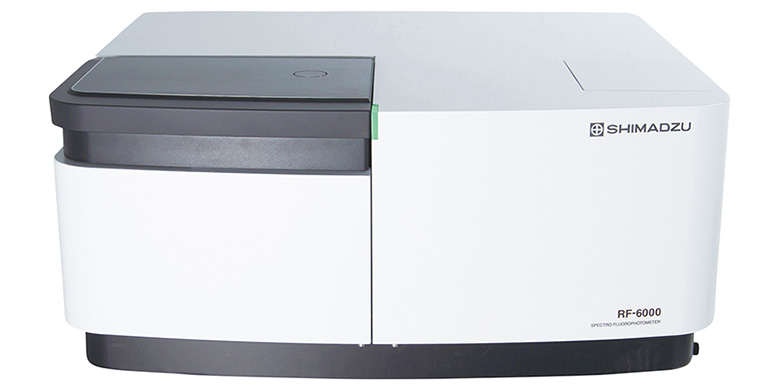
Molecular Spectroscopy encompasses a broad range of analytical techniques used to identify, characterize, and quantify chemical substances by measuring their interaction with light. These techniques utilize ultraviolet (UV), visible (Vis), infrared (IR), Raman, fluorescence, and near-infrared (NIR) regions of the electromagnetic spectrum to reveal detailed information about molecular structure, composition, and concentration.
Shimadzu's Molecular Spectroscopy portfolio includes advanced UV-Vis spectrophotometers, FTIR spectrometers, Raman microscopes, infrared microscopes, fluorescence spectrophotometers, and specialized spectroscopy software. These solutions help scientists obtain rapid, non-destructive molecular information while delivering high sensitivity, reproducibility, and confidence in analytical results.
A key strength of molecular spectroscopy is its ability to provide complementary analytical information. Infrared spectroscopy measures molecular vibrations through light absorption and is particularly effective for identifying functional groups and organic compounds. Raman spectroscopy measures scattered laser light and excels in the analysis of inorganic materials, pigments, carbon-based compounds, and microscopic particles. Using both techniques together enables more comprehensive molecular characterization than either technique alone.
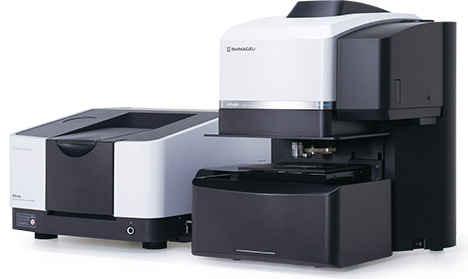
Shimadzu’s innovative AIRsight™ Infrared/Raman Microscope exemplifies this combined approach by enabling infrared and Raman measurements from the same sample location without moving the sample. This allows researchers to obtain complementary organic and inorganic information, improving identification accuracy and streamlining workflows for material analysis, contamination studies, and microplastics research.
What is “molecular spectrometry” in Shimadzu’s portfolio?
Molecular spectrometry measures molecule–light interactions across UV‑Vis, IR, fluorescence, and Raman. These techniques enable identification, quantitation, and characterization for QA/QC, R&D, and regulatory workflows.
Which instruments are included (UV‑Vis, FTIR, Fluorescence, Raman)?
UV‑Vis spectrophotometers, FTIR spectrometers, fluorescence spectrometers, and Raman systems. Availability and models may vary by region.
What core specifications should I compare?
Resolution, wavelength accuracy, signal‑to‑noise (S/N), baseline stability, optical throughput, dynamic range, and stray‑light performance.
How do I choose the right instrument for my sample type?
Match technique to matrix: UV‑Vis for absorbance/transmission in liquids or films; FTIR with ATR for solids and unknowns; fluorescence for trace/sensitive detection; Raman for non‑destructive, rapid ID of materials and polymorphs.
What are typical applications?
Pharma potency/assay, raw material ID, food authenticity and additives, environmental monitoring (water/air), and materials characterization (polymers/coatings).
Can Shimadzu systems support regulated environments?
Yes. Software packages offer user roles, audit trails, e‑signatures, and controlled method management to support 21 CFR Part 11 and GMP practices.
Which software options are available, and how do they differ?
Packages vary by instrument family, but commonly include method templates, compliance features, batch processing, and data export/reporting tools.
Can I integrate data with LIMS/ELN or export results?
Yes. Systems support secure exports (CSV, PDF) and integration via standard formats or APIs depending on the software bundle and configuration.
Which sampling accessories are recommended?
ATR crystals for FTIR solids, integrating spheres for diffuse/reflective UV‑Vis, fiber probes for remote sampling, micro‑cells for low‑volume, and temperature‑controlled stages for stability studies.
How do I achieve low detection limits and high repeatability?
Optimize optics, use high‑quality cells, control temperature, apply baseline correction, average replicates, and validate methods with suitable standards.
What calibration standards and procedures are recommended?
Polystyrene films (FTIR), certified wavelength/absorbance standards (UV‑Vis), fluorescence standards for S/N benchmarking, and Raman calibration targets.
Can workflows be automated?
Yes. Options include autosamplers, flow cells, batch methods, and scripted acquisition/processing to increase throughput and reduce manual steps.
What maintenance is required?
Routine checks of optics and sampling accessories, scheduled calibration, software backups, and preventive maintenance through service plans.
How do service and warranty work in my region?
Regional Shimadzu service teams provide installation, training, warranty repair, and preventive maintenance; local terms vary—contact your Shimadzu representative.
How should I handle challenging matrices?
Use ATR for opaque solids, integrating spheres for scattering samples, dilute or filter viscous matrices, and consider Raman for dark/colored materials.
What options exist for micro‑analysis or in‑situ measurements?
Micro‑cells, fiber probes, microscope‑coupled Raman/FTIR options, and temperature/ environmental stages enable localized or controlled-condition analysis.
What training resources and application notes are available?
Product manuals, application notes, webinars, and on‑site/remote training sessions; your local team can recommend materials for your use case.
Can I retrofit existing instruments with new accessories or software?
Often yes—compatibility depends on model and generation. Consult Shimadzu for approved accessories and software upgrades.
What are total cost of ownership (TCO) considerations?
Instrument price, accessories, standards, maintenance, uptime, and training. Proper method design can reduce consumables and rework costs.
How does Shimadzu ensure data integrity?
Role‑based access, encrypted files, audit trails, and controlled method/versioning, with validation support and documentation packages.
Are there preconfigured method templates?
Yes—common assays and ID workflows ship with templates that can be adapted to your SOPs and regulatory requirements.
How do I troubleshoot common issues?
Check alignment and cleanliness, verify reference/background, inspect cells, confirm wavelength calibration, and review method parameters and baselines.
What environmental/ESG considerations apply?
Energy use, consumable reduction through optimized methods, durable accessories, and service plans that maximize uptime and extend instrument life.
How do I get local support, demos, or quotations?
Contact your regional Shimadzu office or authorized partner for demos, sample testing, quotations, and implementation planning.